
Bone Mass
Bone mass refers to the amount of minerals (typically calcium and phosphorus) contained within the bones.
During childhood and adolescence, bones undergo continuous processes of renewal and growth, reaching their final length and strength around the age of 20-25.
The peak bone mass (PBM) is the maximum amount of bone mineral tissue present at the end of growth; it is typically reached around 16-18 years of age in females and around 20-22 in males. During the third decade of life, there may still be minimal increases in bone mineral content.
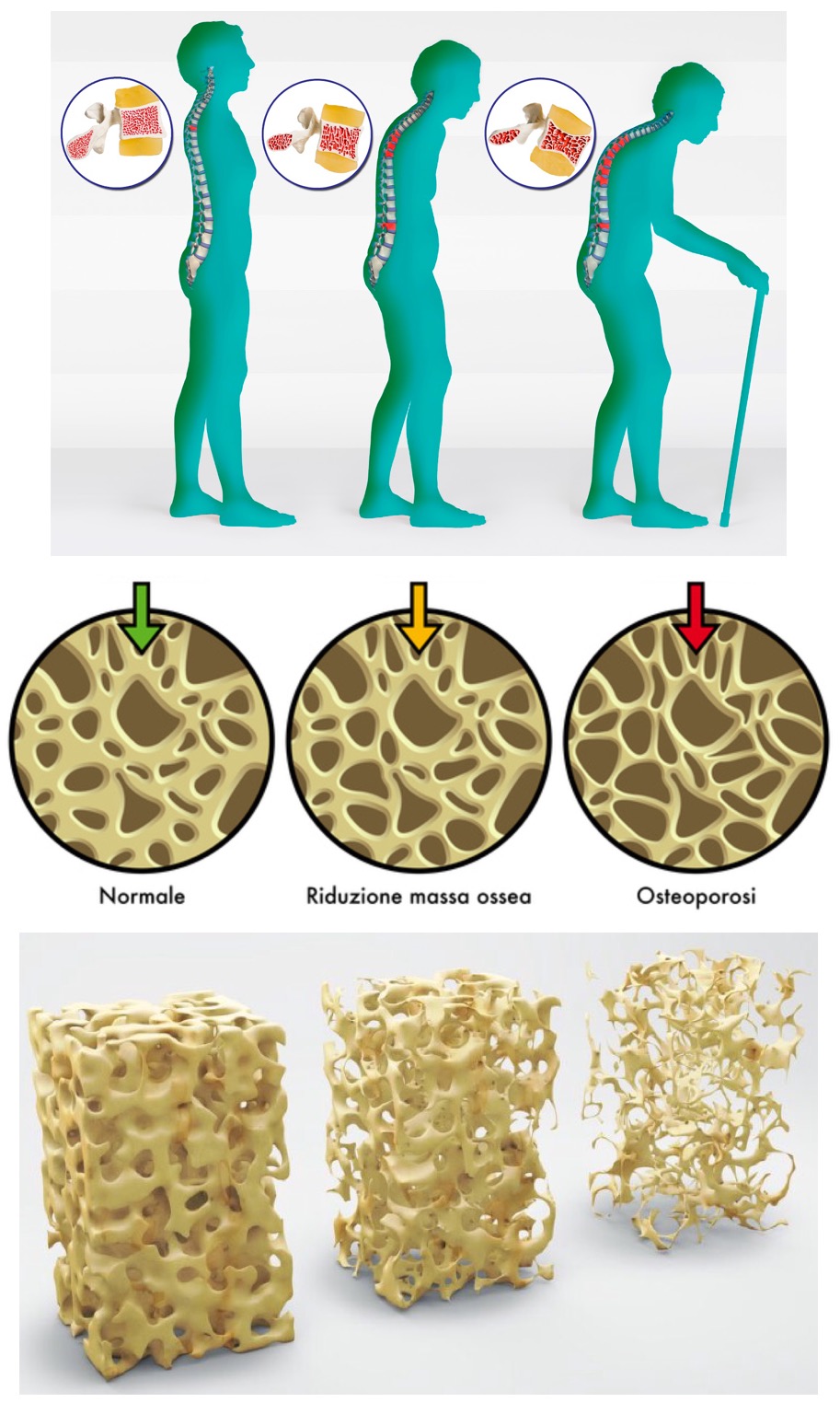
From this point onward, bone density and size do not increase further and remain stable throughout adulthood. Despite this, bones continue to undergo a constant process of remodeling, where the amount of bone resorbed is balanced by an equal amount of newly formed bone. However, in older adults, this replacement process becomes unbalanced, with bone resorption exceeding bone formation. This is a slow and gradual process that affects both spongy and compact bone, often leading to a condition known as osteoporosis.
Although not everyone with low bone mass develops osteoporosis, low bone mass is a significant risk factor for osteoporosis and fractures. It is scientifically proven that good physical condition and muscle tone are directly correlated with healthy and strong bones.


